What is it like to be a man but a bat?
There seem to be at least two problems with the inaccessibility of mental states.
First, communication. Our language is a tool to communicate publicly; it has no good words to describe private experiences, the nuances of "what is it like". Bodily sensations give us some grounding, because I can tell you how grief, or sadness, or shame feel in my body; but the richness of my mental states is not exhausted by how I feel it in my body. What does it feel like to integrate your children into your sense of self? How differently does praise land when you are ill? How does it feel to sit when everyone around you stands?
We employ metaphors, but words themselves don't make you feel. Art is ambiguous and imprecise in some ways, but reaches deeper when it works. We describe the context, the narrative, trying to create a context for the feel to respond in the addressee. Limited as it is, this is the best we can do for now.
If our mental states are physically determined, we could potentially make some device that would "make us feel" in certain ways, with some accuracy. It is, of course, not a straightforward task, because we already know that there is no one-to-one mapping between neural activation patterns and our mental activity. Even things like vision can be realized by different parts of the brain, so if I feel redness in some way, physically this is encoded in my brain state in a way that may not be directly transferable to a different brain. At least partly, this is also shaped by my personal life history and the way my brain was trained to recognize colors, shapes, and, generally, make sense of the noisy visual input from my retina.
The second reason is also related to our personal life story. I use the bat here simply as a convenient image of radical transformation, not as a link to Nagel's line of argument.
I can't really feel the world like a bat feels it. First, bats' perception structures the world by sensory capacities humans lack; it's hard to imagine echolocation the way bats feel it 1. Second, our mental state depends on both biology and past experience. If I ask a wizard to turn me into a bat but leave all my memory and cognitive capabilities intact, I will likely experience the world not as a bat, but as a human-transformed-into-bat.
Just like Arthur from the cartoon who broke the heart of a poor squirrel, I won't feel the world as a bat, and I won't relate well to either humans or bats.
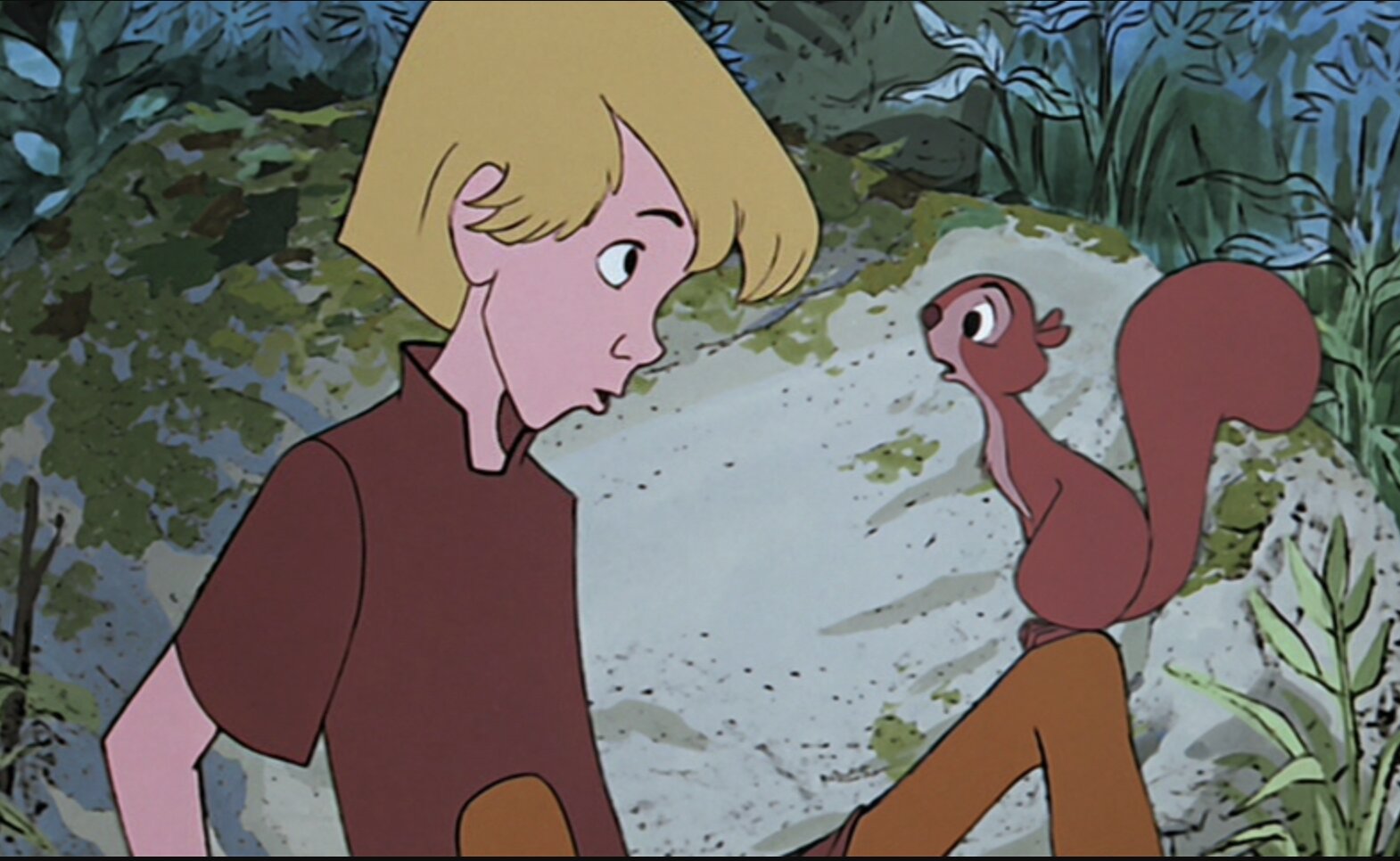
My experiences also shape my meaning-making faculty. When I look at a specific collection of atoms, I see an object, a book; when I look inside, I see the letters beyond ink traces, the meaning behind words. To really experience the world as a bat I have to forget my history and all the skills I have acquired through my lifetime. Whether something substantial is left of me after that, I do not know. I would lose the forms of language, reflection, and narrative self-understanding through which I now organize my life. Likely after this transformation, there won't be any me to experience the world as a bat and to make sense of it. This feels close to a complete self-erasure.
Moreover, like a newborn who can't immediately figure out three-dimensional space or object permanence in time, I will experience something that I have no framework to make sense of. Would I even be able to remember that, if some part of me were still present to observe?
Footnotes:
We now know that humans can actually be trained in echolocation. But we are likely experiencing it differently from bats anyway.